

Selecting a college is an important decision for both students and parents, particularly when the course is connected to healthcare and professional responsibility. Beyond the campus appearance or admission brochure, the quality of education depends on academic standards, practical learning opportunities, faculty guidance and the support available throughout the course.
For students exploring a D Pharma college in Greater Noida, understanding these factors can make it easier to compare institutions and choose a programme that aligns with their educational plans. Orlean College of Pharmacy, Greater Noida, offers a Diploma in Pharmacy (D Pharma), a two-year programme for students interested in pharmaceutical sciences and pharmacy practice.

Start With the Course Approval and Affiliation
Before considering facilities or campus life, students and parents should check whether the D Pharma programme has the necessary regulatory approval and the appropriate examining authority or affiliation.
The Pharmacy Council of India (PCI) is an important source for checking pharmacy education approvals. Students should verify the approval status for their intended admission session rather than relying solely on an older certificate or a general statement on a website. The college’s affiliation and the applicable examination authority should also be confirmed.
According to Orlean College of Pharmacy’s published information, its D Pharma programme is affiliated with the Board of Technical Education, Uttar Pradesh, Lucknow. The college has published approval documents for earlier academic sessions, including 2025–26. Applicants should confirm the latest applicable approval and admission details directly before enrolling.
Does the College Offer a Strong Academic Foundation?
D Pharma introduces students to the scientific and practical foundations of pharmacy. The curriculum covers subjects that help learners understand medicines, dosage forms, pharmaceutical preparations and the responsibilities associated with pharmacy practice.
A supportive academic environment should encourage students to understand concepts instead of relying only on memorisation. Clear explanations, regular assessments, opportunities to ask questions and access to learning resources can all contribute to a more effective educational experience.
Parents can ask how students receive academic guidance, how practical work is assessed and what support is available when a learner finds a subject challenging. These questions can reveal more about the day-to-day learning experience than promotional claims alone.
Practical Learning Should Be Part of the Experience
Pharmacy education connects scientific knowledge with real-world responsibilities. Students need to become familiar with appropriate procedures, accurate documentation, safe working habits and the importance of handling medicines responsibly.
Practical sessions, demonstrations, assignments and guided activities can help reinforce classroom concepts. Students should also learn why accuracy and following established procedures matter in pharmacy-related work.
When visiting a college, prospective students and parents can ask about the practical components of the course, the resources available for academic work and how practical assessments form part of the programme. Understanding these arrangements helps them evaluate whether the learning environment supports the course requirements.

Faculty Guidance and Student Support Matter
Moving from school-level science subjects to specialised pharmacy studies can take time. Faculty members who explain concepts clearly, encourage questions and provide constructive feedback can help students build confidence as they progress through the course.
Regular academic interaction is also useful for developing study discipline and identifying areas that need improvement. Students should look for an environment where learning involves discussion and understanding, not just preparation for examinations.
At Orlean College of Pharmacy, the college highlights interactive, industry-oriented teaching, project-based learning and regular assessments as elements of its educational approach. Prospective students can discuss these academic arrangements with the institution to understand how they are implemented in the current programme.
Look at the Overall College Environment
A student’s experience is shaped by more than classroom teaching. Access to a library, suitable study spaces, extracurricular activities and opportunities to interact with other students can contribute to a broader college experience.
Parents may also want to understand attendance expectations, assessment schedules, student support arrangements and the availability of accommodation if the student will be relocating to Greater Noida. Where hostels are being considered, it is sensible to ask about current availability, facilities, costs and rules before making plans.
Visiting the campus, where possible, gives families an opportunity to ask questions and understand the environment in which the student will spend the next two years.
Consider Fees Alongside What the College Provides
Course fees are an important part of the decision, but comparing colleges only by the lowest advertised amount can leave out important details. Students and parents should request a clear breakdown of tuition fees and any applicable additional charges, including examination, registration, transport or accommodation costs.
It is also useful to ask about the payment schedule, refund policy and any scholarships or financial assistance for which the student may be eligible. Written confirmation can help families plan their budget and avoid confusion later.
The most suitable option is one that fits the family’s financial circumstances while meeting the student’s academic and practical learning needs.
What Can Students Explore After D Pharma?
Completing D Pharma can provide a foundation for further education and eligible pharmacy-related career pathways. Depending on current regulations, registration requirements and individual eligibility, students may explore work in community or retail pharmacy settings, hospital-related pharmacy services and other relevant areas.
Eligible students may also consider further study, including B Pharma through an applicable admission route. Admission requirements and lateral-entry rules can vary according to the prevailing regulations, so these should be checked before planning the next qualification.
A college should explain the academic pathway clearly without promising guaranteed jobs, salaries or career outcomes. Students can then consider how the qualification fits their longer-term interests.
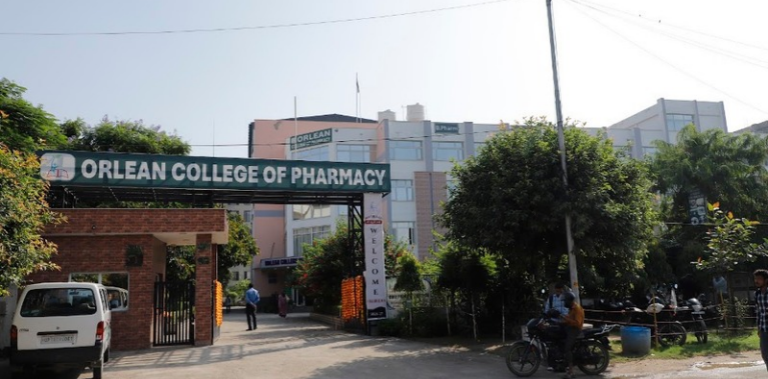
Exploring D Pharma at Orlean College of Pharmacy, Greater Noida
For students seeking a D Pharma college in Greater Noida, Orlean College of Pharmacy is one institution to explore when comparing course structure, academic support and campus arrangements.
The college offers a two-year Diploma in Pharmacy programme and also provides a B Pharma programme for students considering a longer undergraduate pathway. Reviewing the course details, checking the latest regulatory status and discussing admission requirements directly with the college can help families make a better-informed decision.
Before finalising admission, students and parents should confirm the current eligibility criteria, applicable fees, approval for the relevant academic session and required documents.
Making a Decision With Confidence
A good D Pharma college should offer more than a course seat. It should provide an appropriate academic foundation, opportunities to develop practical understanding, access to faculty guidance and a learning environment in which students can take their responsibilities seriously.
For families comparing pharmacy colleges in Greater Noida, the best approach is to ask specific questions, verify official information and assess the complete educational experience. Taking time to evaluate these details can help students begin their pharmacy education with clearer expectations and a better understanding of the path ahead.