

The pharmacy profession has evolved significantly over the past decade. Today, pharmacists are not only responsible for dispensing medicines but also play an important role in healthcare, pharmaceutical research, drug development, quality assurance, clinical services, and patient safety. As the pharmaceutical industry continues to advance, employers are looking for graduates who possess more than theoretical knowledge. They want professionals who can confidently apply their learning in real-world situations.
This is why practical-based pharmacy education has become more important than ever. It helps students develop technical skills, scientific understanding, professional confidence, and industry readiness, making them better prepared for successful careers in the pharmaceutical sector.
The Gap Between Theory and Real-World Practice
Understanding pharmaceutical concepts through textbooks is an essential part of pharmacy education, but true learning happens when students apply those concepts in laboratories and practical sessions.
For example, learning about drug formulation in a classroom provides valuable theoretical knowledge, but preparing formulations in a laboratory gives students firsthand experience with pharmaceutical processes. Similarly, studying pharmaceutical analysis becomes much more meaningful when students perform experiments using laboratory instruments and interpret real experimental data.
Practical education bridges the gap between academic knowledge and professional application, allowing students to understand how pharmaceutical science works in everyday healthcare and industry settings.
Building Strong Technical Skills
The pharmaceutical industry relies heavily on accuracy, precision, and technical competence. Practical learning enables students to become familiar with laboratory equipment, scientific instruments, formulation techniques, analytical procedures, and pharmaceutical calculations.
Regular laboratory sessions help students improve their observation skills, laboratory techniques, documentation practices, and attention to detail. These technical abilities are essential for careers in pharmaceutical manufacturing, quality control, research laboratories, regulatory affairs, and hospital pharmacy.
Graduates who have extensive practical exposure often adapt more quickly to professional responsibilities because they already understand the working environment.
Developing Scientific Thinking
One of the greatest benefits of practical education is that it encourages students to think like scientists rather than simply memorize information.
Laboratory experiments require students to observe carefully, analyze results, identify errors, and draw logical conclusions. They learn to ask questions, solve problems, and understand why certain pharmaceutical processes work the way they do.
This scientific approach develops analytical thinking, which becomes valuable throughout a pharmacy professional’s career, whether working in research, manufacturing, or patient care.
Preparing Students for Modern Pharmaceutical Industries
Today’s pharmaceutical companies use advanced manufacturing technologies, strict quality standards, digital systems, and sophisticated laboratory equipment. Employers expect graduates to understand these professional environments before entering the workforce.
Practical-based education introduces students to laboratory procedures, quality testing methods, pharmaceutical formulations, and modern scientific techniques that reflect current industry practices.
This early exposure helps students become more comfortable with professional workflows, reducing the learning curve during internships and full-time employment.
Improving Confidence Through Hands-On Learning
Confidence is built through experience. Students who regularly perform laboratory experiments become more comfortable handling chemicals, operating instruments, recording observations, and following scientific procedures.
As they complete practical assignments and laboratory exercises, they gradually develop the confidence needed to work independently. This confidence also improves their performance during industrial training, campus interviews, and future employment opportunities.
Instead of feeling uncertain in professional environments, practically trained students are prepared to contribute from the beginning of their careers.
Understanding the Importance of Accuracy
In pharmacy, even a small error can affect medicine quality and patient safety. Practical education teaches students the importance of precision, cleanliness, documentation, and discipline.
Students learn to follow Standard Operating Procedures (SOPs), maintain laboratory records, perform calculations accurately, and comply with safety regulations. These habits become an important part of their professional development and prepare them for careers where quality standards are strictly maintained.
Encouraging Innovation and Research
Research and innovation continue to drive advancements in pharmaceutical science. Practical education gives students opportunities to participate in laboratory projects, scientific investigations, and research activities that stimulate curiosity and creativity.
Working on experiments allows students to understand how medicines are developed, tested, and improved before reaching patients. This exposure also encourages many students to pursue higher education, research careers, or specialized fields within pharmaceutical sciences.
Supporting Better Career Opportunities
Employers today value graduates who can contribute immediately without requiring extensive basic training. Students with strong practical experience often have an advantage during placements because they already possess many of the technical skills expected by pharmaceutical companies.
Practical-based education prepares students for diverse career opportunities, including pharmaceutical manufacturing, quality assurance, quality control, formulation development, clinical research, pharmacovigilance, regulatory affairs, hospital pharmacy, and healthcare services.
The combination of academic knowledge and practical expertise makes graduates more competitive in today’s rapidly growing pharmaceutical industry.
Why Orlean College of Pharmacy Focuses on Practical Learning
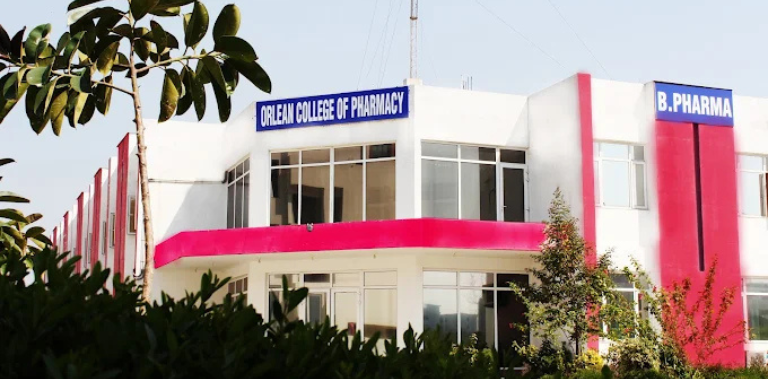
For students searching for a trusted B Pharma College in Greater Noida, Orlean College of Pharmacy believes that practical education is one of the strongest foundations for professional success.
The college combines classroom teaching with extensive laboratory training, allowing students to apply theoretical concepts through hands-on experiments and scientific practice. Modern laboratory facilities, experienced faculty guidance, and an industry-oriented approach help students strengthen their technical knowledge while developing confidence and professional skills.
Beyond laboratory education, Orlean College of Pharmacy encourages students to participate in workshops, seminars, practical sessions, and skill-development activities that prepare them for real-world pharmaceutical careers. This balanced learning approach ensures students graduate with both academic excellence and practical competence.
As healthcare and pharmaceutical industries continue to evolve, practical learning has become more valuable than ever before. Students who receive strong practical education gain a deeper understanding of pharmaceutical sciences, improve their technical abilities, and develop the confidence required to succeed in professional environments.
If you’re planning to pursue B Pharma Admissions 2026, choosing a Pharmacy College in Greater Noida that emphasizes practical learning, modern laboratories, and industry-oriented education can significantly shape your future career.
At Orlean College of Pharmacy, practical-based education is an integral part of the learning experience, helping students become knowledgeable, skilled, and industry-ready professionals prepared to make meaningful contributions to the world of healthcare and pharmaceutical sciences.